
Resources
Commonwealth Swallowing Diagnostics strives to support our customers and their patients by providing a variety of resources related to FEES.
Scroll down to find informational handouts, helpful links, and relevant research citations. Check back soon to find links to our blog, socials, recorded webinars, and more to come!
Informational Handouts
Dysphagia Cost
Studies show dysphagia significantly increases healthcare costs, adding roughly 30% to 40% more to inpatient hospital expenses per admission. Dysphagia extends hospital stays by an average of 2 to 4 days and can lead to costly complications like aspiration pneumonia, averaging around $17,000 per episode of care.
Attrill S, White S, Murray J, Hammond S, Doeltgen S. Impact of oropharyngeal dysphagia on healthcare cost and length of stay in hospital: a systematic review. BMC Health Serv Res. 2018;18(1):594. Published 2018 Aug 2. doi:10.1186/s12913-018-3376-3
Bonilha HS, Simpson AN, Ellis C, Mauldin P, Martin-Harris B, Simpson K. The one-year attributable cost of post-stroke dysphagia. Dysphagia. 2014;29(5):545-552. doi:10.1007/s00455-014-9543-8
Hwang D, Teno JM, Gozalo P, Mitchell S. Feeding tubes and health costs postinsertion in nursing home residents with advanced dementia. J Pain Symptom Manage. 2014;47(6):1116-1120. doi:10.1016/j.jpainsymman.2013.08.007
Westmark S, Melgaard D, Rethmeier LO, Ehlers LH. The cost of dysphagia in geriatric patients. Clinicoecon Outcomes Res. 2018;10:321-326. Published 2018 Jun 6. doi:10.2147/CEOR.S165713
Cichero JA, Altman KW. Definition, prevalence and burden of oropharyngeal dysphagia: a serious problem among older adults worldwide and the impact on prognosis and hospital resources. Nestle Nutr Inst Workshop Ser. 2012;72:1-11. doi:10.1159/000339974
Langmore SE, Skarupski KA, Park PS, Fries BE. Predictors of aspiration pneumonia in nursing home residents. Dysphagia. 2002; 10.1007/s00455-002-0072-1
Value of FEES Imaging
Studies show that FEES exams completed in the post-acute care setting demonstrate significant improvement in diet levels, lower rates of pneumonia, and improved outcomes measures.

Hopkins-Rossabi T, Lenze A, Lindler SC, Hardy C, Temple SL. Analysis of Patients' Dietary Status/Restrictions Following Instrumental Swallow Evaluations in Skilled Nursing Facilities. Dysphagia. Apr 2025;40(2):476–488. doi:10.1007/s00455-024-10750-x
Hopkins A, Vollman C, Boyce S, Krekeler BN. Accessing Swallow Imaging Evaluations in the Community: A Cross-Sectional Survey of Speech-Language Pathologists. Perspectives of the ASHA Special Interest Groups. 2026;11(3):934–946. doi:10.1044/2025_persp-25-00173
Bice EM, Galek KE, Ward M. Dysphagia and Diets in Skilled Nursing Facilities When Patient's Health Status Changes: The Role of Imaging. J Am Med Dir Assoc. 2024;25(2):381-386. doi:10.1016/j.jamda.2023.11.008
Pekacka-Egli AM, Kazmierski R, Lutz D, et al. Reassessment of Poststroke Dysphagia in Rehabilitation Facility Results in Reduction in Diet Restrictions. J Clin Med. 2021;10(8):1714. Published 2021 Apr 15. doi:10.3390/jcm10081714
Langmore SE. History of Fiberoptic Endoscopic Evaluation of Swallowing for Evaluation and Management of Pharyngeal Dysphagia: Changes over the Years. Dysphagia. 2017;32(1):27-38. doi:10.1007/s00455-016-9775-x
Importance of Instrumentals
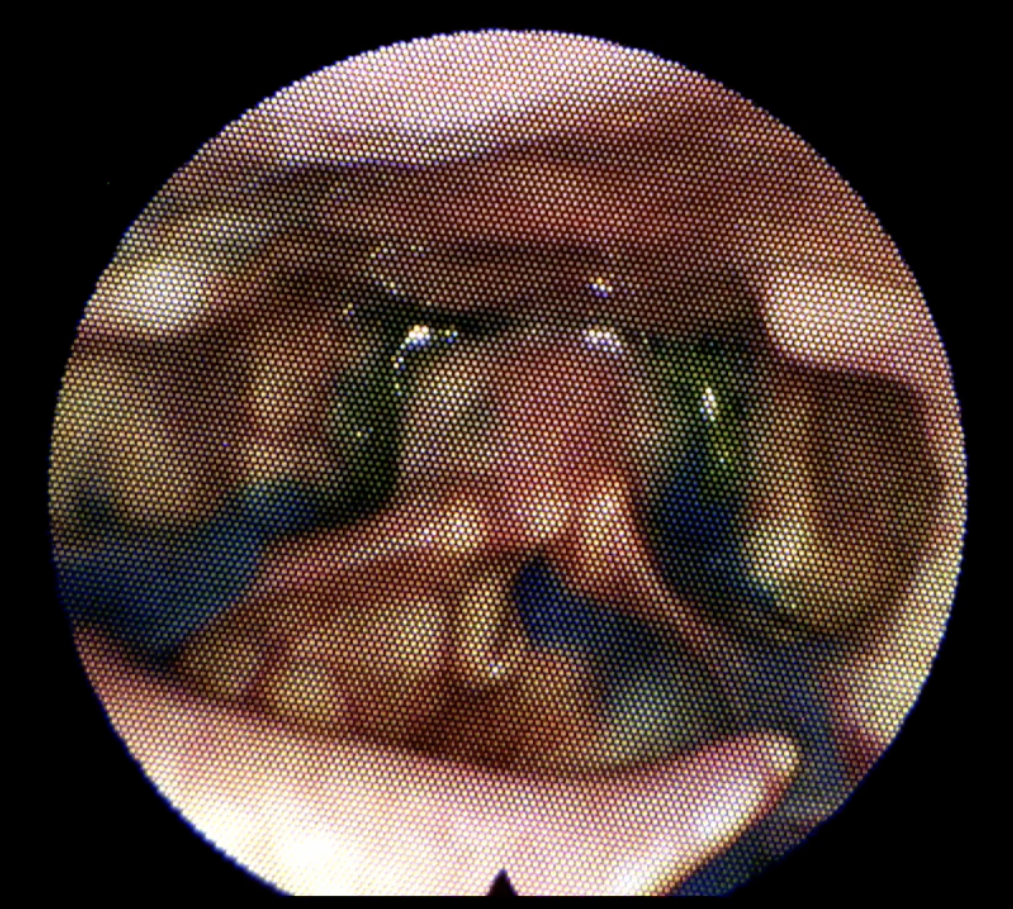
The direct visualization of anatomy and physiology during FEES allows for assessment of tissue and muscle function, anatomical variants and abnormalities, and provides insight into the true etiology for dysphagia.
Leder SB. Comparing Simultaneous Clinical Swallow Evaluations and Fiberoptic Endoscopic Evaluations of Swallowing: Findings and Consequences. Perspectives on Swallowing and Swallowing Disorders (Dysphagia). 2015; ASHA Volume 24.
Bours GJ, Speyer R, Lemmens J, Limburg M, de Wit R. Bedside screening tests vs. videofluoroscopy or fibreoptic endoscopic evaluation of swallowing to detect dysphagia in patients with neurological disorders: systematic review. J Adv Nurs. 2009;65(3):477-493. doi:10.1111/j.1365-2648.2008.04915.x
Leder SB, Espinosa JF. Aspiration risk after acute stroke: comparison of clinical examination and fiberoptic endoscopic evaluation of swallowing. Dysphagia. 2002;17(3):214-218. doi:10.1007/s00455-002-0054-7
Lim SH, Lieu PK, Phua SY, et al. Accuracy of bedside clinical methods compared with fiberoptic endoscopic examination of swallowing (FEES) in determining the risk of aspiration in acute stroke patients. Dysphagia. 2001;16(1):1-6. doi:10.1007/s004550000038
Miles A, McFarlane M, Scott S, Hunting A. Cough response to aspiration in thin and thick fluids during FEES in hospitalized inpatients. Int J Lang Commun Disord. 2018;53(5):909-918. doi:10.1111/1460-6984.12401
Pazak J, Bhatt NK, Levy A, Schick S, O'Dell K. Incidental Laryngeal Findings on Bedside Flexible Endoscopic Evaluation of Swallowing in a Community Hospital Setting. Ann Otol Rhinol Laryngol. 2021;130(8):881-884. doi:10.1177/0003489420987201
Comfort and Safety of FEES
FEES has proven to be a safe and well tolerated method of assessing swallow function when performed by a trained Speech Pathologist. The rate of complications associated with FEES is less than 1% overall.

Dziewas R, Auf dem Brinke M, Birkmann U, et al. Safety and clinical impact of FEES - results of the FEES-registry. Neurol Res Pract. 2019;1:16. Published 2019 Apr 26. doi:10.1186/s42466-019-0021-5
Warnecke T, Teismann I, Oelenberg S, et al. The safety of fiberoptic endoscopic evaluation of swallowing in acute stroke patients. Stroke. 2009;40(2):482-486. doi:10.1161/STROKEAHA.108.520775
Aviv JE, Murry T, Zschommler A, Cohen M, Gartner C. Flexible endoscopic evaluation of swallowing with sensory testing: patient characteristics and analysis of safety in 1,340 consecutive examinations. Ann Otol Rhinol Laryngol. 2005;114(3):173-176. doi:10.1177/000348940511400301
O'Dea MB, Langmore SE, Krisciunas GP, et al. Effect of Lidocaine on Swallowing During FEES in Patients With Dysphagia. Ann Otol Rhinol Laryngol. 2015;124(7):537-544. doi:10.1177/0003489415570935
Kamarunas EE, McCullough GH, Guidry TJ, Mennemeier M, Schluterman K. Effects of topical nasal anesthetic on fiberoptic endoscopic examination of swallowing with sensory testing (FEESST). Dysphagia. 2014;29(1):33-43. doi:10.1007/s00455-013-9473-x
Fife TA, Butler SG, Langmore SE, et al. Use of topical nasal anesthesia during flexible endoscopic evaluation of swallowing in dysphagic patients. Ann Otol Rhinol Laryngol. 2015;124(3):206-211. doi:10.1177/0003489414550153
Lester S, Langmore SE, Lintzenich CR, et al. The effects of topical anesthetic on swallowing during nasoendoscopy. Laryngoscope. 2013;123(7):1704-1708. doi:10.1002/lary.23899
FEES and MBSS
Studies show there is a good agreement between MBSS and FEES when examining premature spillage, pharyngeal residue, laryngeal penetration, and tracheal aspiration. FEES has proven to be as sensitive, or more sensitive, than MBSS relative to standard swallowing parameters.
Giraldo-Cadavid LF, Leal-Leaño LR, Leon-Basantes GA, et al. Accuracy of endoscopic and videofluoroscopic evaluations of swallowing for oropharyngeal dysphagia. Laryngoscope. 2017;127(9):2002-2010. doi:10.1002/lary.26419
Pisegna JM, Langmore SE. Parameters of Instrumental Swallowing Evaluations: Describing a Diagnostic Dilemma. Dysphagia. 2016;31(3):462-472. doi:10.1007/s00455-016-9700-3
Kelly AM, Drinnan MJ, Leslie P. Assessing penetration and aspiration: how do videofluoroscopy and fiberoptic endoscopic evaluation of swallowing compare?. Laryngoscope. 2007;117(10):1723-1727. doi:10.1097/MLG.0b013e318123ee6a
Rao N, Brady SL, Chaudhuri G, Donselli JJ, & Wesling MW. Gold-standard? Analysis of the videofluoroscopic and fiberoptic endoscopic swallow examinations. Journal of Applied Research. 2003; 3(1), 89-96.